COURSE OVERVIEW
What is the difference between Programmable Logic Controllers (PLC) training and Distributed Control System (DCS) training?
Thirty years ago, DCS was primarily used for operating large chemical plants and refineries, while PLCs were typically used for controlling smaller units, such as compressors or turbines. Over the past three decades, advancements in computer technology have significantly reduced the difference between DCS and PLC systems. However, major DCS vendors still sell their products to large chemical industries due to the extensive features offered by DCS systems.
For an aspiring automation engineer, the choice between starting with PLC or DCS depends on individual goals and job preferences. Regardless, familiarity with both systems will soon be necessary, as most automation engineers are required to work with both PLCs and DCS at different stages of their careers. The first job an engineer takes can influence which path they take. However, identifying the DCS expertise most needed can be challenging. We encourage you to speak with our career counselor (free of charge) to determine the most suitable path for your career. Below is an overview of our Emerson DeltaV DCS Training.
In this course, you will learn to design and program the Emerson DeltaV DCS using various programming tools. Whether you already have familiarity with DeltaV or are a beginner, this course will help enhance your knowledge. We will tailor the training to suit your existing knowledge and future learning goals.
By the end of the course, students will be able to:
-
Design the system architecture for a new plant or manufacturing facility
-
Complete the network architecture
-
Install programs on a new system
-
Program logic based on functional narratives
-
Conduct functional tests
-
Create Human-Machine Interface (HMI) designs
-
Verify communication with peripheral systems using advanced communication protocols (e.g., Modbus, OPC)
-
Commission the DCS in a test system
-
Prepare the system for handover to operations
In this training, you will also gain essential knowledge of what an Instrumentation Engineer needs to know to transition into a Control Engineer role. As a control engineer, you will collaborate with electrical engineers, instrumentation technicians, and process engineers, and this training will equip you to interact with them effectively and professionally.
Additionally, this course covers the fundamentals of electrical and electronics engineering, electrical safety, wiring basics, control science, and instrumentation—critical knowledge for anyone in the automation and control systems field.
COURSE OBJECTIVES
The following topics will be covered in the Emerson DeltaV DCS Training:
-
DCS Functionality in Chemical, Petrochemical, and Refinery industries
-
Main Components of DCS
-
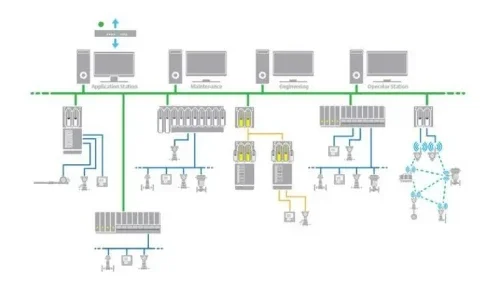
DCS Architecture
-
Control Loop Fundamentals and PID Blocks
-
Integrated Self-Sufficient Controllers (Analog Loops)
-
Modern Digital Control Loops (Advanced PIDs)
-
DCS Electrical Fundamentals – Power Requirements
-
UPS Systems for Controllers
-
Choosing between DCS and PLC
-
Overview of Emerson DeltaV DCS / SIS
-
Emerson DeltaV DCS / SIS Hardware Components
-
Functional Blocks of Emerson DeltaV DCS / SIS
-
Network Interfaces for Emerson DeltaV DCS / SIS
-
Alarm Management System in DeltaV
-
DCS Loop Drawings with Typical Examples
-
General Arrangement (GA)/Internal Arrangement (IA) Cabinet Layout
-
Emerson DeltaV DCS / SIS Cabinet Architecture
TRAINING METHODOLOGY
Our Emerson DeltaV DCS Training includes the following modes of delivery:
-
Classroom and Virtual Lectures
-
Advanced Topics through Seminars and Presentations
-
Technical Group Discussions
-
Class Assignments
-
Industrial Case Studies and Practical Training Exercises
From the very first class, we emphasize practical learning by training students to “download” to a real DCS system, providing hands-on experience throughout the course.
ORGANISATIONAL BENEFITS
Industries sending their employees to Excel Automation Solutions for DCS training will benefit in the following ways:
-
Employees will better understand the specific DCS used in their plant, contributing to immediate improvements in productivity, efficiency, and reliability.
-
They will be better equipped to contribute to decisions on DCS upgrades and expansions.
-
Trained employees can pass on their knowledge to other personnel who could not attend the training.
-
Employees can participate in new projects, specifying requirements, engaging in vendor meetings, and contributing to DCS system selection, implementation, and project commissioning.
PERSONAL BENEFITS
For individuals, this training represents a transformative opportunity, providing you with the following benefits:
-
Understand the operating principles of various sensors and transducers used in Distributed Control Systems (DCS)
-
Learn about the construction and operation of the most commonly used DCS systems
-
Evaluate and select appropriate sensor technologies for specific DCS applications
-
Gain the skills to design, build, and test a DCS-based system based on a given specification
-
Identify key components and features of a DCS
-
Optimize control systems using relevant DCS software tools
WHO SHOULD ATTEND?
The Emerson DeltaV DCS Training is ideal for the following professionals:
-
Entry-level Service Engineers and experienced technicians involved in the operation and maintenance of instruments and control systems
-
Engineers interested in starting a career in industrial automation
-
Engineers and electricians seeking to understand how automation works in order to expand their technical knowledge
-
Mechanical and Electrical Engineering graduates interested in learning about PLC/DCS interfacing with external systems
-
Computer Science and Computer Engineering graduates working with real-time systems
-
Instrument and Process Control Technicians
-
Maintenance Engineers and Technicians
-
Mechanical Engineers and Technicians
-
Process or Manufacturing Operations Engineers
-
Process or Manufacturing Technicians
-
Production and Operations Managers
-
Engineers working in System Integration companies
-
Anyone interested in understanding how modern factories are automated, networked, and interfaced
-
Fresh Graduates with limited experience in automation, control systems, instrumentation, or process control engineering
Emerson DeltaV DCS Training
Training Duration: 40 Hours
Training Content:
-
DeltaV DCS Introduction
-
System Overview
-
DeltaV DCS Architecture Overview
-
DeltaV Explorer
-
DeltaV Operate
-
DeltaV Control Modules
-
DeltaV Program Types
-
Input / Output Configuration
-
DeltaV Database
-
I/O Generation
-
Alarm Management
-
Field Instruments
-
HART Transmitter Configuration
-
Field bus Configuration
-
Serial / Modbus Configuration
-
Profibus Configuration
-
FBD / SFC programming
-
Communication Methods
-
Pre Commissioning procedures
-
Loop Checking
-
DeltaV Control Loops – Single, Cascade, Split, Feed forward
-
DCS System Architecture Design
-
DeltaV Loop Tuning’s
-
FAT / SAT procedures
-
Hardware Overview
-
Hardware design
-
Panel Design
-
P&ID diagram Overview
-
Graphics Development
-
DeltaV Networks design
-
Process History view
-
Motor Control
-
Real time project Implementation
-
Project based learning
-
Commissioning Overview
-
project management
Industrial / Project Documents:
-
P&ID Diagram (P&ID)
-
I/O List
-
Cause & Effect diagram (C&E)
-
Control Narratives
-
Single Line diagram
-
Function Design specifications (FDS)